How India’s Luxury Hotels Perform Online showing the digital signals that shape trust, demand and the hidden gaps separating leaders from the rest.
Lóránt Erős
Digital Strategist
This article is part of our broader DDD series and represents only a small preview of what a full Digital Due Diligence uncovers.
Its goal is to show how digital signals reveal brand strength, customer intent, competitive gaps, and experience quality in an industry where trust and perception are formed long before a guest steps inside.
For this snapshot, we analyzed 18 luxury hotels across India, major properties from the Taj Group, The Oberoi Group, Radisson Blu, ITC, St. Regis, Holiday Inn, and others. Their digital footprints show how the expectations of high-end travelers have changed and what makes certain brands stand out.
Key Takeaways
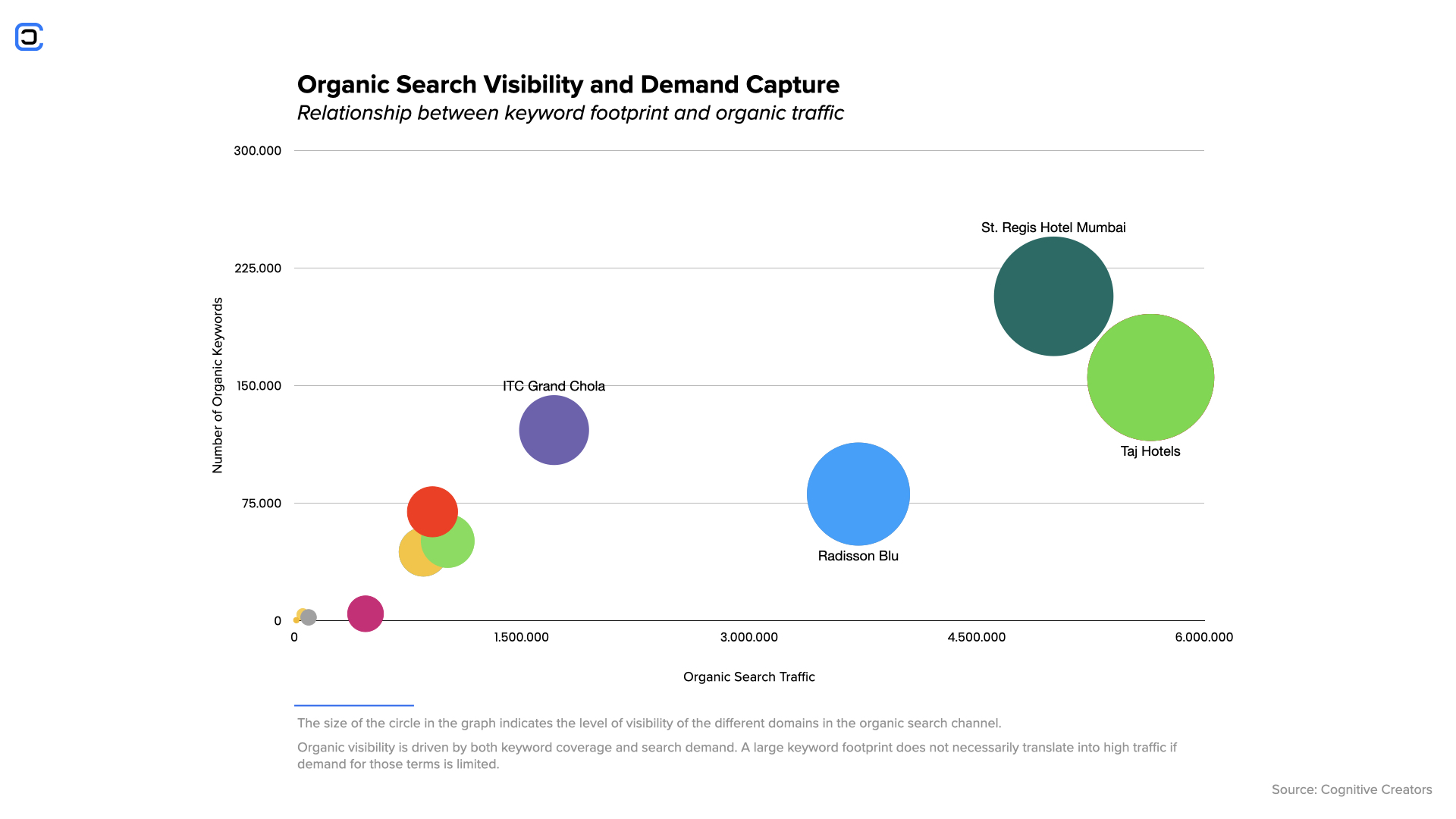
Taj Hotels leads digital visibility by a wide margin: high digital visibility expands organic demand, increases booking independence, and reduces dependency on OTAs.
St. Regis Hotel Mumbai dominates global search interest: High search intent reflects trust, desirability, and top-of-mind awareness.
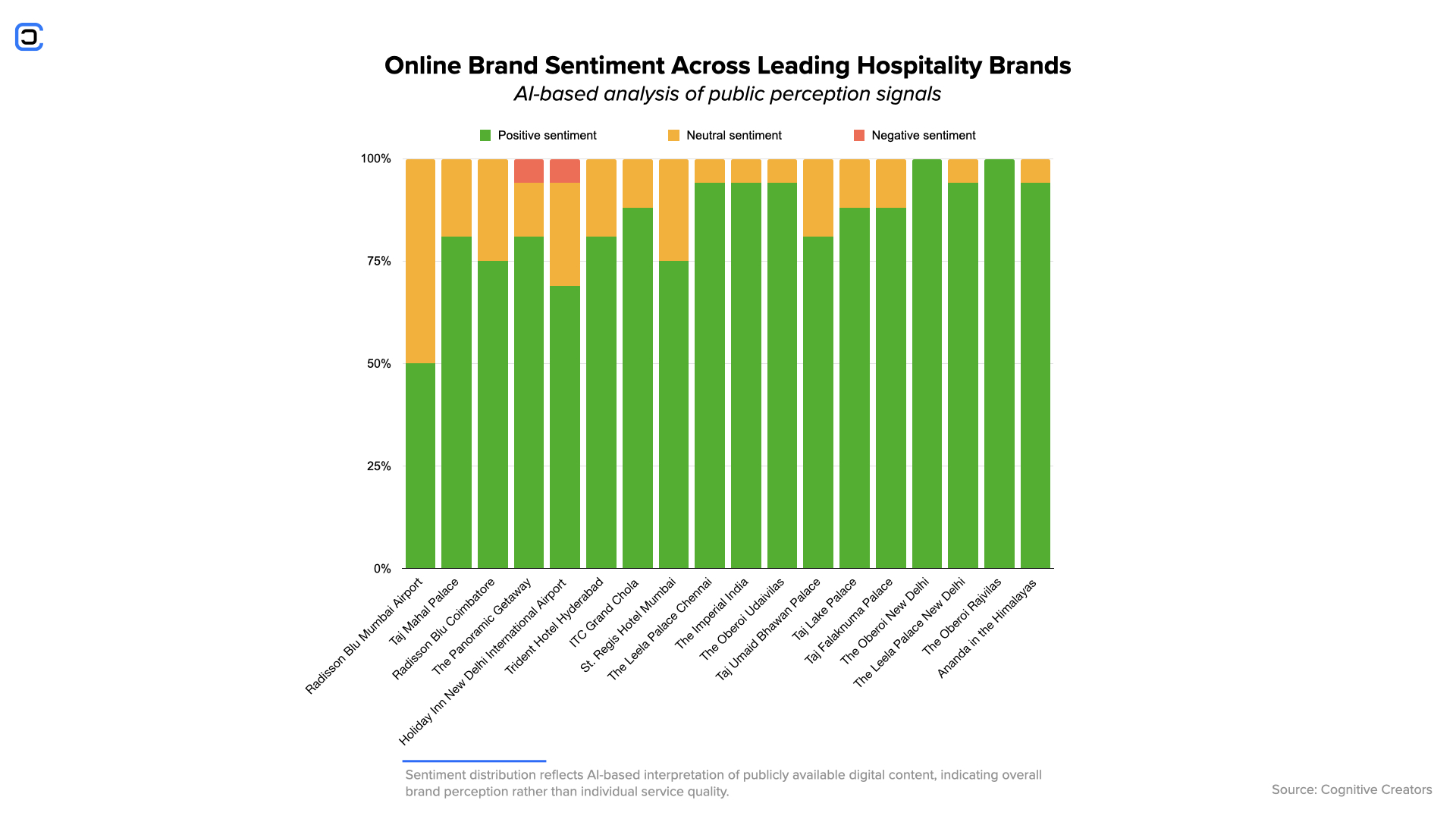
The Oberoi Group stands out with exceptionally positive sentiment: strong sentiment signals translate into better review economics and fewer reputation risks.
Smaller properties like The Panoramic Getaway or Ananda in the Himalayas operate in limited digital environments.
LinkedIn is unexpectedly the strongest channel across the industry.
Why Digital Matters More Than Ever in Hospitality
The shift didn’t happen overnight. In the early 2000s and even around 2010, hotel reputation was still shaped mainly through offline experiences, travel agents, magazines, and word of mouth. But starting after 2010, digital presence rapidly became the most influential layer of brand perception. Today:
travelers discover hotels on social media before they discover them in brochures
booking decisions are shaped by aggregated reviews across multiple platforms
search behavior reveals trust patterns more reliably than surveys
and sentiment signals influence both pricing flexibility and guest expectations
Modern guests compare digital experiences long before comparing room rates. They evaluate (just a few, without claiming to be exhaustive):
Transparency (Are prices clear? Is cancellation explained well?)
Consistency (Does the website match what guests see on Instagram?)
Experience proof (Are there real photos, stories, and guest moments?)
Responsiveness (Is the brand active, helpful, and quick to clarify issues?)
These are no just “nice to have”, they influence conversion, loyalty, and long-term brand equity.
Social Media Visibility Is High at the Top, Fragmented Elsewhere
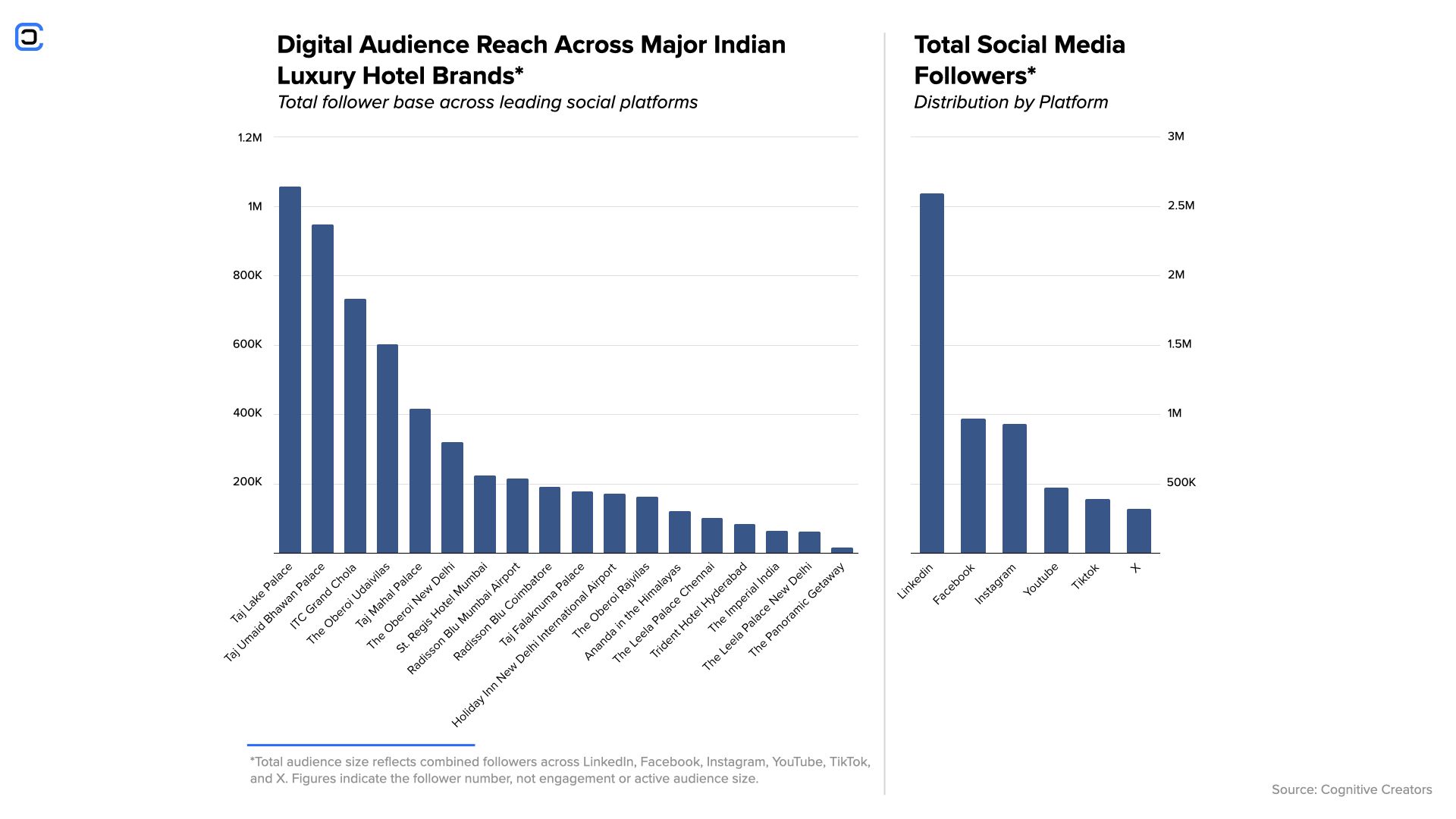
The Taj Group leads social visibility by a wide margin. Taj Lake Palace and Taj Umaid Bhawan Palace surpass one million followers each. Their storytelling power and heritage positioning give them a natural edge.
A surprising insight: LinkedIn is the largest channel across the entire dataset, accounting for nearly 45% of all aggregated followers.
Instagram and Facebook remain essential, but the high reliance on LinkedIn shows that hotels speak mainly to professional or aspirational audiences (not always to the younger, experience-seeking demographic shaping modern travel culture).
Platforms like TikTok are barely used, leaving room for hotels to grow through experiential, human, behind-the-scenes storytelling.
Search Demand and Digital Interest
Search behavior tells a lot about what travelers intend to do long before they book. In this space, a few brands clearly stand out. St. Regis Hotel Mumbai draws an exceptional amount of global search interest, far more than any other property in the group. Taj Hotels also show strong, steady growth year after year, a sign that both international and domestic travelers actively seek them out. Radisson Blu remains highly visible as well, benefitting from its international network and broad functional appeal.
At the other end of the spectrum, hotels like The Panoramic Getaway and Ananda in the Himalayas appear much less frequently in searches. Their lower visibility suggests that awareness and discoverability are still early in development, leaving significant room for growth through stronger digital positioning.
Digital Brand Strength
Long-term digital popularity shows how well each hotel bounces back when the market shifts. The pandemic hit everyone, but the speed of recovery wasn’t the same. Some hotels, like St. Regis and several Taj properties, regained visibility almost immediately. Others, such as ITC Grand Chola and Radisson Blu Mumbai Airport, climbed back more gradually.
A few remain inconsistent, with visibility that rises and falls depending on the moment, the message, or the season.
What really matters isn’t the absolute score but the direction of travel. An upward curve usually signals stronger public perception, more consistent communication, better engagement, richer storytelling, and growing interest from both domestic and international travelers.
These patterns are long-term indicators of brand health, showing not just where a hotel stands today but how powerfully it is positioned for the years ahead.
Sentiment & Reviews: The Oberoi Group Sets the Standard
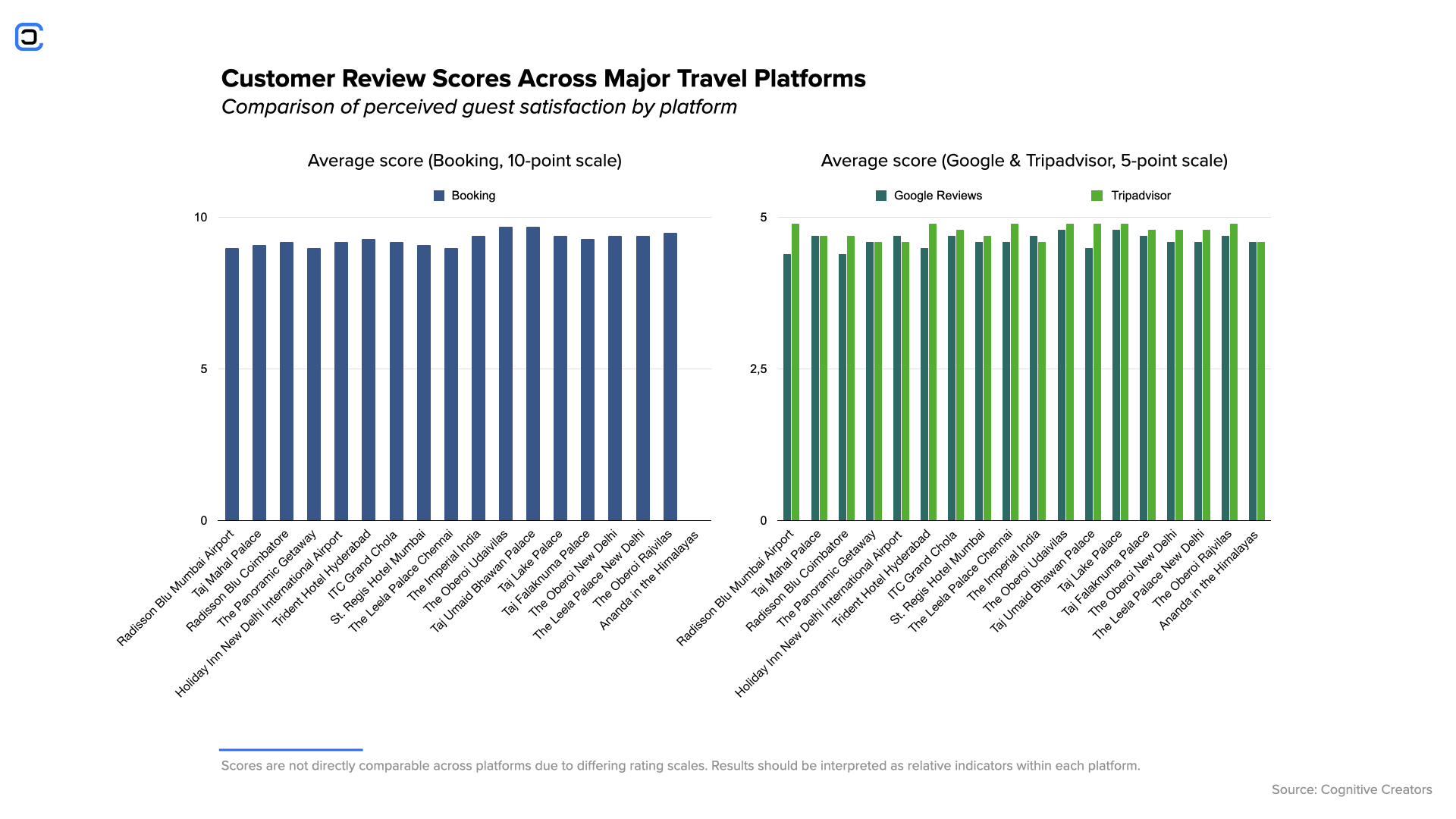
Sentiment analysis paints a picture of how guests feel about India’s luxury hotels. Oberoi properties sit at the top, earning praise across both AI evaluations. Taj Lake Palace also stands out with warm feedback, especially around its service and atmosphere. Only a few hotels show small pockets of negative sentiment, usually tied to unclear pricing, noise, or slower service moments.
What strengthens these insights is the consistency across Google, Tripadvisor, and Booking, which makes the positive perception even more credible. Google Reviews, by far the most active platform, has become the main reputation engine for luxury hotels in India.
In this industry, sentiment is more than a reflection of service quality. It predicts pricing power, conversion efficiency, and how resilient a brand remains when the market shifts.
Solid Websites and Technical Foundations, Still Limited Differentiation
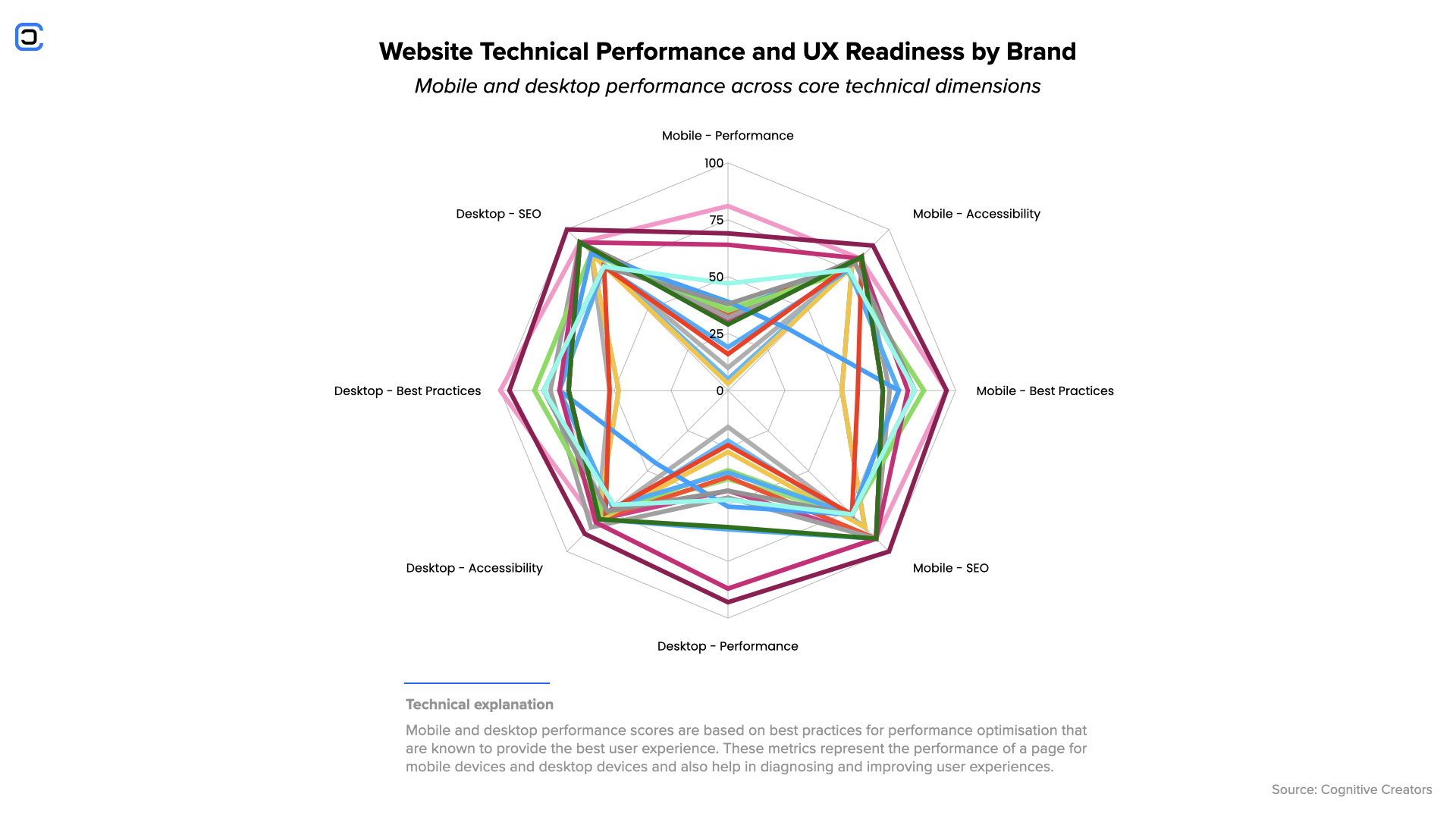
Most hotels score well on the technical side. That’s actually rare in traditional industries, and it means the baseline is already high.
In luxury hospitality, technical scores don’t set brands apart, the experience does. Fast access to info, smooth booking flows, intuitive navigation, rich room previews, and storytelling that mirrors the real stay all shape the feeling of luxury long before a guest arrives. These small moments make the biggest difference.
Closing Thoughts
India’s luxury hotel landscape is reshaping itself in real time. Taj dominates through sheer visibility, St. Regis captures global search demand, The Oberoi Group leads on reputation, and Radisson Blu performs commercially while still needing stronger digital trust signals.
What emerges is clear: heritage alone no longer wins. The brands that communicate better, engage smarter, and prove their experience online are the ones pulling ahead. And this snapshot is only the surface. A full Digital Due Diligence reveals the deeper story, the assets, behaviors, journeys, and risks that determine where true digital value can be created next.
Digital Investment Literacy Index (DILI)
If you want to understand how well you interpret digital signals like these, you can try the Digital Investment Literacy Index (DILI): a short, free assessment that helps investors identify the digital factors that influence valuation, risk, and long-term performance. Developed by Cognitive Creators, DILI is an independent benchmark designed to help the investment community evaluate digital signals with greater confidence.
We’re curious in which car do you see yourself taking this roadtrip. If you need a helping hand figuring out the road to grow, check out our Consultancy services and don’t hesitate contacting us.
Explore the true potential of your digital endeavours
When was the last time you lost sight of a seemingly minor detail that kicked back? While thinking about it, check out how we can help you with uncovering the digital opportunities and risks that were not evident from the start.